Sponsor: Do you build complex software systems? See how NServiceBus makes it easier to design, build, and manage software systems that use message queues to achieve loose coupling. Get started for free.
I keep seeing posts pushing back on the idea that coding isn’t the hard part. And I get why. A lot of the disagreement comes down to what people mean by coding.
YouTube
Check out my YouTube channel, where I post all kinds of content on Software Architecture & Design, including this video showing everything in this post.
But in the world I work in, coding usually is not the hard part.
I’m talking about line of business and enterprise apps. Order management, healthcare, insurance, logistics, and similar systems. In those kinds of systems, the real difficulty is usually not writing code. That is not to say building software is easy, because it is not. But if you understand your tools, your language, your libraries, your frameworks, and you have a solid foundation, the coding itself is often the more mechanical part.

That is because these systems usually are not algorithmically complex. Some domains absolutely are, but most of the systems I’m talking about are more workflow complex than algorithmically complex. Once you have a good foundation and you know the tooling you are working with, building the system often becomes a matter of assembling pieces. You keep adding on to what is already there. In that sense, the implementation can start to feel routine.
The hard part is figuring out what to build
What is not routine is figuring out what needs to be built in the first place.
That is where the real complexity shows up. What events occur in the system? What triggers them? What business rules apply? What data has to remain consistent? What edge cases exist? How does the process actually work from end to end?
Those are the questions that make this hard.
For line of business systems, the best developers I know understand business well. They know how to break down workflows, decompose a problem, and understand how things move through a system. You are not just writing code. You are trying to understand how a business operates and then model that in software.
Why boundaries are difficult
That is why I keep saying that defining boundaries is one of the most important things you can do, and also one of the most difficult.
There are techniques that can help, like event storming, but it is still hard to take a large system, break it into smaller parts, and decide where responsibilities belong. That is where most of the real design work is.
Part of the disagreement around this topic is probably just different definitions of coding. One reply I saw said that applying a good design to an existing system is coding. And if that is your definition, then we are not that far apart. Because I am talking about system design and implementation together. That work is difficult. Building line of business systems absolutely has complexity.
Workflow complexity is different from technical complexity
I use messaging and event driven architecture examples a lot because they make this easy to see.
If you are building a workflow based system, you may have to deal with idempotency, retries, backoffs, dead letter queues, concurrency, claim check patterns, and all kinds of technical concerns. Those things are difficult. In many cases they are more difficult than implementing a specific business step in a workflow.
But even there, the hardest part usually is not the code for a single step. It is understanding the workflow, modeling it correctly, and knowing how it can evolve when the business process changes or when your original assumptions turn out to be incomplete.
A simple shipment example
Take a shipment workflow as a simple example.
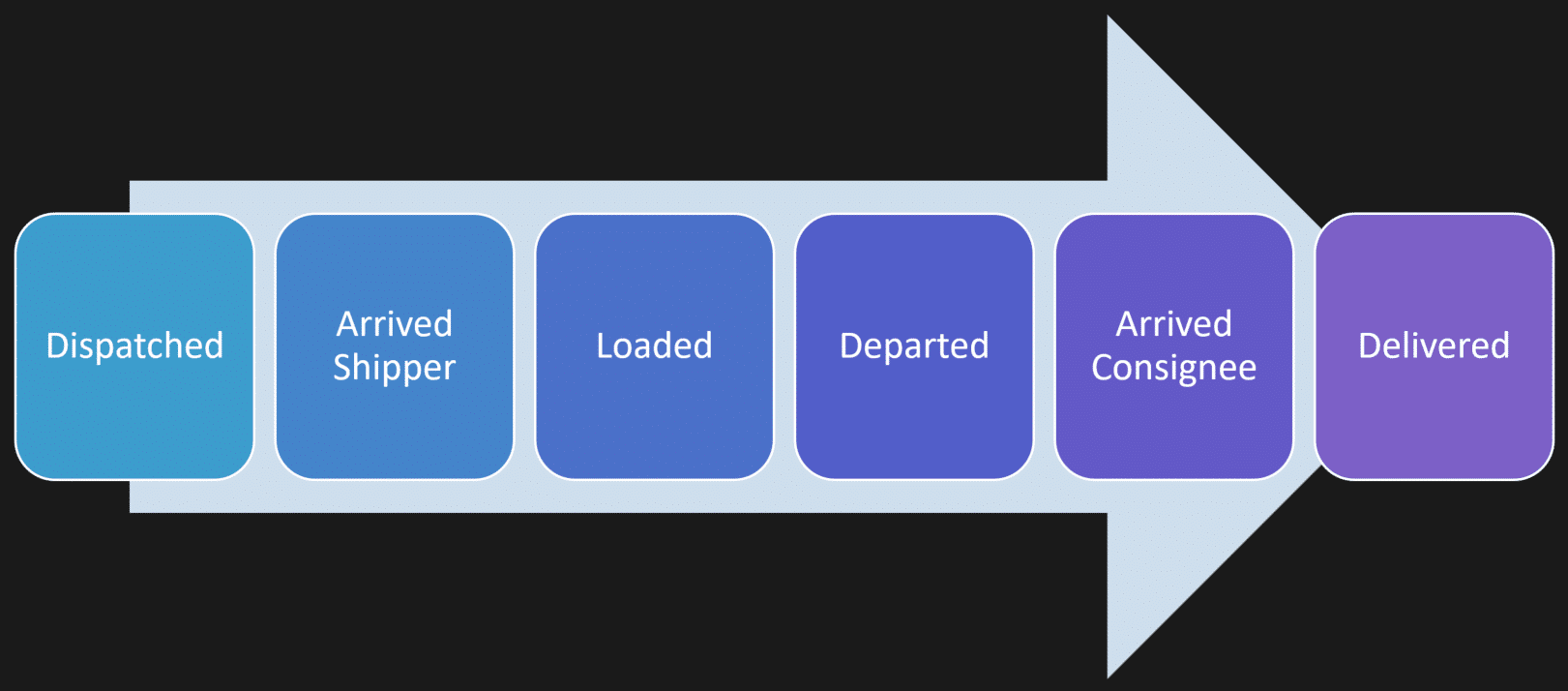
At a high level, you might say a shipment is dispatched, a driver arrives for pickup, the shipment is loaded, the driver departs, arrives at the destination, and completes delivery.
That sounds straightforward when you say it like that. But real systems are rarely that simple.
Maybe one truck is handling multiple shipments.
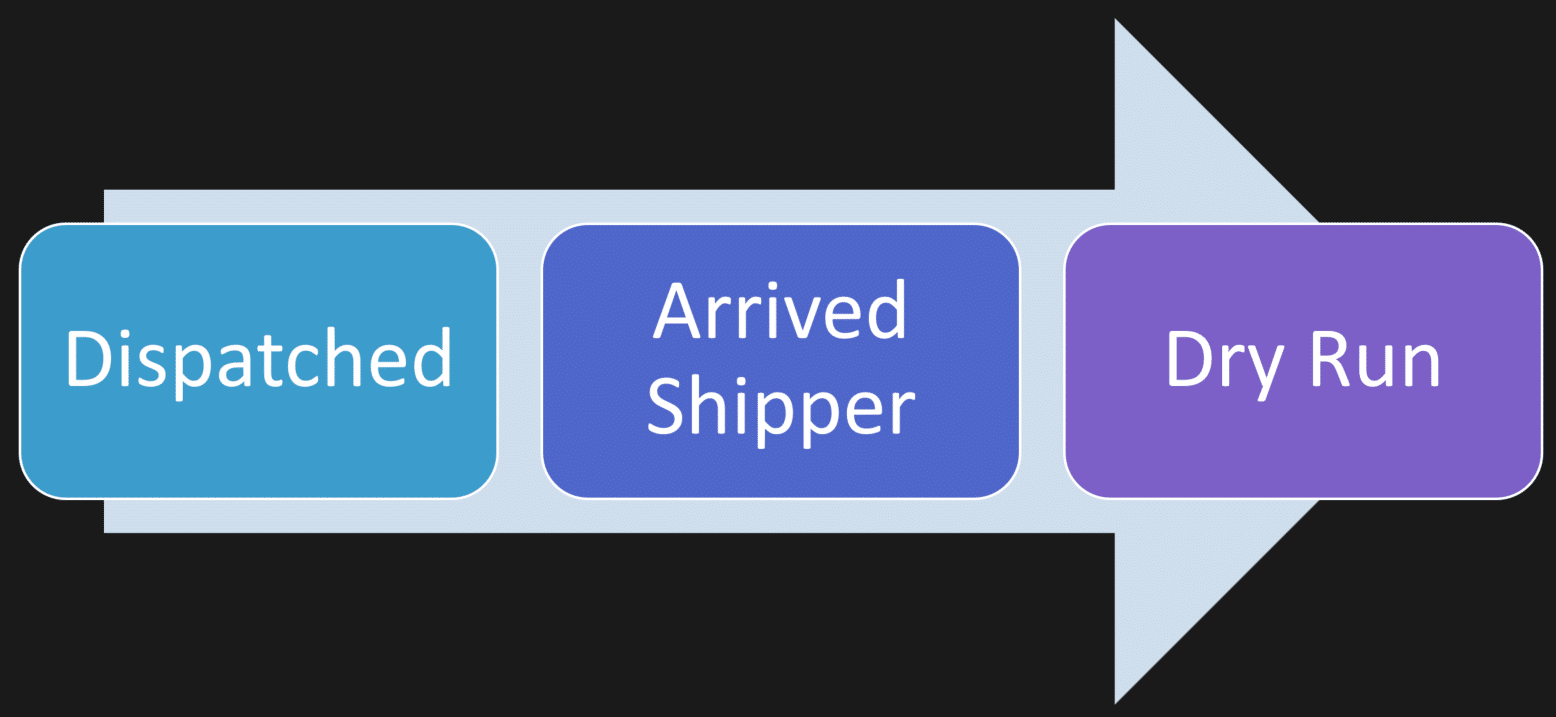
Maybe a pickup becomes unavailable. Maybe the shipment is delayed and there is no point in sending the driver. This is called a dry-run.
Maybe parts of the process branch depending on the customer, the carrier, or the type of delivery.
So now what are you modeling? Is it one workflow or several? Where do those boundaries exist? What belongs together and what should be separate?
That is the hard part.
Writing the code for each step is usually the easier part once you actually understand the model.
Once the model is clear, implementation becomes mechanical
That is why methods like event storming are useful. They help you focus on the events, actions, side effects, users, and different perspectives before you jump into code.
You want to understand the workflow first. You want to understand how smaller workflows fit into larger ones and how they cross boundaries. That work can be done with business people long before you start writing implementation code.
Once you understand it well enough, the implementation often starts to feel templated.
You have probably felt this if you work in .NET and use a messaging framework. Good frameworks handle a lot of the technical heavy lifting for you. They deal with plumbing like the outbox, inbox, logging, database concerns, and idempotency so you can focus on the specific behavior you need to implement.
That is a good thing. But it also makes the point pretty clear.
At that stage, a lot of the work becomes filling in the blanks. The workflow has already been defined. The messages already exist. The handlers are just implementing the behavior you already modeled.
That does not mean there are no hard technical problems
There absolutely are hard technical challenges.
Scaling problems, data consistency issues, infrastructure concerns, deployment issues — those are all real. I like those problems. But those are often architectural issues around the shape and growth of the system, not questions about the business workflow itself.
They are different kinds of difficulty.
A lot of the pushback on “coding isn’t the hard part” comes from people saying that translating ideas into precise, working systems requires deep knowledge and experience. I agree with that completely. But I still separate understanding the business and designing the system from the actual implementation work.
Those are closely related skills, but they are not the same skill.
What the best developers actually do well
The best developers I know are not just technically capable. They understand the business domain. They can decompose a system. They know how to reason about workflows and boundaries.
Yes, they are also good with their tools and can handle concurrency, messaging, and technical complexity. But that is not what makes them stand out most.
What makes them stand out is that they can answer the hard design questions.
Where do responsibilities belong? Who owns the data? What capabilities belong in which part of the system? How are boundaries crossed? How coupled are different parts of the system? What kind of data coupling, timing coupling, or deployment coupling exists?
Those are technical questions, but they are also design questions. They sit above the level of just writing code.
So is coding the hard part?
So when I say coding isn’t the hard part, I am not saying building software is easy.
I am saying the hardest part of building business systems is usually understanding the business, modeling workflows, defining boundaries, and designing a system that can actually support the way the business works.
Once you have done that well, the coding often becomes the easier part.
Join CodeOpinon!
Developer-level members of my Patreon or YouTube channel get access to a private Discord server to chat with other developers about Software Architecture and Design and access to source code for any working demo application I post on my blog or YouTube. Check out my Patreon or YouTube Membership for more info.